
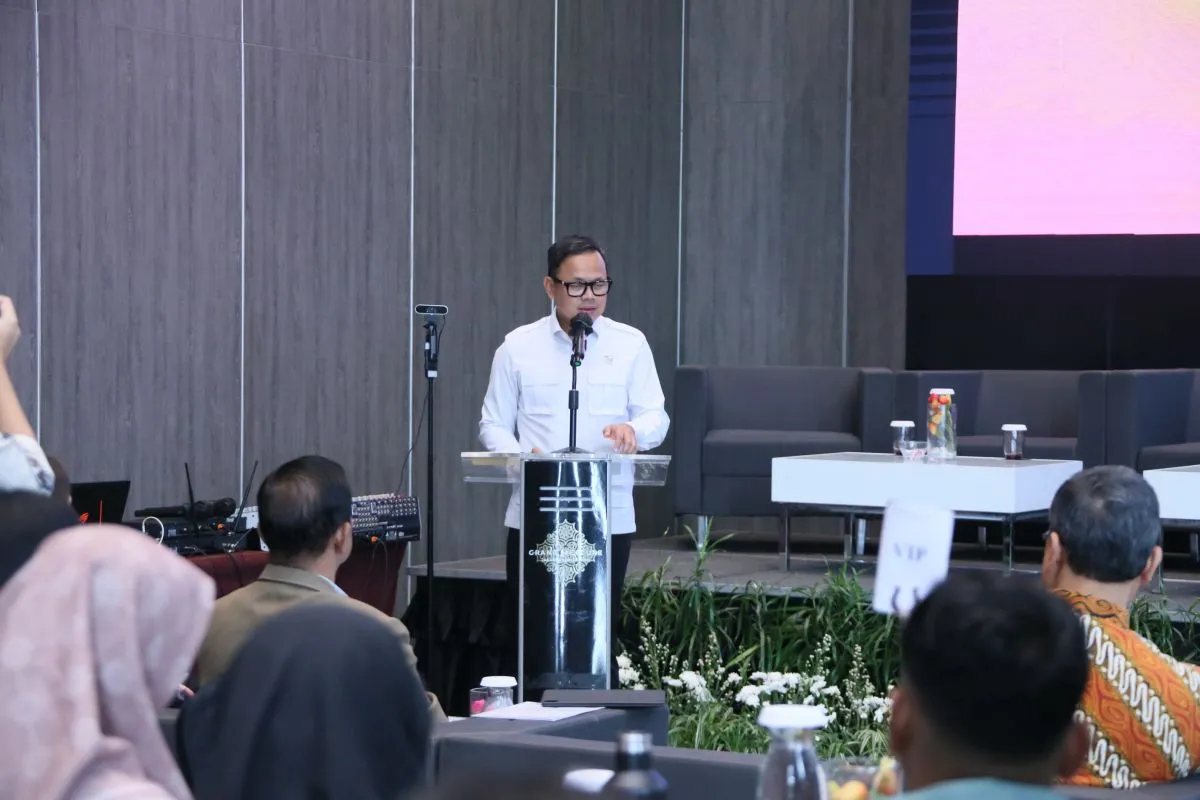
Jakarta, Indonesia – While countries worldwide struggle with the growing effects of climate change, a high-ranking Indonesian government official argues that the main obstacle is no longer insufficient policies or promises, instead it is poor implementation at a regional level.
The key to meaningful progress, he argues, lies in strengthening regional governance.
Policy Gaps Persist Between National Commitments and Local Action
Speaking at the National Policy Dialogue and Workshop for Social Inclusion and Resilience in Asia (SIRA) in Jakarta, Deputy Minister of Home Affairs Bima Arya Sugiarto stressed that while Indonesia has robust international pledges and policies supporting sustainable development and net-zero emissions, these frameworks are failing to translate into effective action on the field.
“The heavy challenge we face is execution,” Sugiarto said.
He highlighted problems that hindered positive development indicators and actual field conditions, referencing poor data integration, weak cross-sector coordination, and insufficient attention to vulnerable groups in planning.
“The urgency often stops at the level of training, documents, or mere budget formalities,” said Deputy Minister Bima Arya Sugiarto.
The Deputy Minister emphasized that perspectives on gender, inclusivity, and disability must not be treated as additional programs but as integral parts of how policy is conceived. “This is about who gets access, who is involved, and who enjoys the benefits,” he noted.
Local Success Stories Offer Replicable Models
To illustrate success, Sugiarto referenced several Indonesian regions with good practices that can be imitated.
Yogyakarta was commended for its solid institutional planning and integrated programming from planning to execution.
Semarang stood out for its community-based approach, while Surabaya was noted for building integrated social services.
Makassar‘s work at the neighborhood (alley) level was recognized as a space for enhancing social and environmental issues.
“The important thing is not the program, but the system,” he concluded, encouraging local governments to focus on institutional capacity, data integration, cross-sector collaboration, and impactful public participation to build inclusive, adaptive, and sustainable regions.
Source: ANTARA News
Feat Image: ANTARA News
