
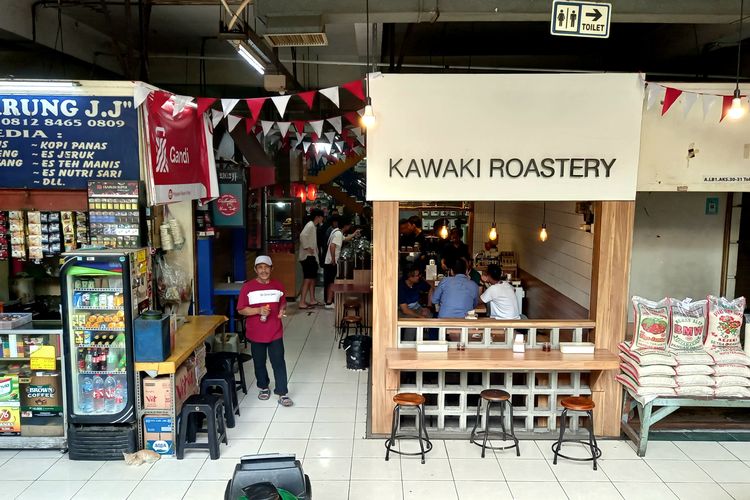
The provincial government of Jakarta is pushing forward an ambitious plan to transform 153 traditional markets into world-class urban destinations, positioning them as economic, social, and cultural anchors of the city’s future growth.
Governor Pramono Anung said the markets, managed by Perumda Pasar Jaya, hold vast potential to evolve beyond daily trading hubs into vibrant public spaces aligned with Jakarta’s vision of becoming a global city.
“Markets in Jakarta have enormous potential to transform from mere daily transaction spaces into urban destinations with high economic, social, and cultural value. This transformation is in line with Jakarta’s development direction toward becoming a global city, as outlined in our regional planning documents,” Pramono said on February 23, 2026), as reported by MetroTVNews.
USD 9.1 Billion in Annual Market Transactions
Jakarta’s traditional markets already represent a powerful economic engine. According to Pramono, total annual transactions exceed USD 9.1 billion involving around 286,000 micro, small, and medium enterprises (MSMEs).
“Currently, economic transactions in Jakarta’s markets reach more than Rp150 trillion per year. There are 153 markets with enormous potential and around 286,000 MSMEs. This is one of Jakarta’s core economic strengths,” he said.
A pilot digitalization program in 20 markets demonstrated how modernization can significantly boost performance. Following the introduction of QRIS digital payments, transactions surged by nearly 47 percent within just two weeks.
“This shows that our society adapts quickly. What remains is how we design markets to be more comfortable, cleaner, and more orderly,” Pramono added.
Inspired by Tokyo and Bangkok
Pramono envisions Jakarta’s markets reaching the level of iconic international markets such as Tsukiji Market in Tokyo, Nishiki Market in Kyoto, and Chatuchak Market in Bangkok.
“When we visit Tsukiji Market, regardless of whether someone is a minister, president, prime minister, or governor, everyone can enjoy the experience — sitting down, eating sushi and sashimi, having coffee. That is what we have yet to achieve,” he said.
He believes Jakarta already has markets with comparable potential, including Pasar Santa and the historic Glodok area. However, comprehensive improvements remain necessary.
Infrastructure, Security, and Transport Integration
The reform agenda goes beyond cosmetic upgrades. Key priorities include physical infrastructure improvements, expanded digital payment systems, enhanced security, and eliminating illegal parking extortion practices that have long discouraged visitors.
Pramono also emphasized the importance of transportation integration. Future connectivity with the MRT system is expected to revitalize markets such as Pasar Baru and Glodok by improving accessibility.
“If the infrastructure is ready, access is good, and there is no parking extortion, then markets can become catalysts for urban development. And market development can be realized if coordination is done properly” he concluded.
Through a Focus Group Discussion (FGD) initiated by the Regional Development Planning Agency (Bappeda) and Pasar Jaya, the government aims to produce a five-year strategic roadmap for upgrading all 153 markets.
Source: MetroTVNews, Detik
Special Photo Credit: Kompas.com/Aska Bagus Aldika
