
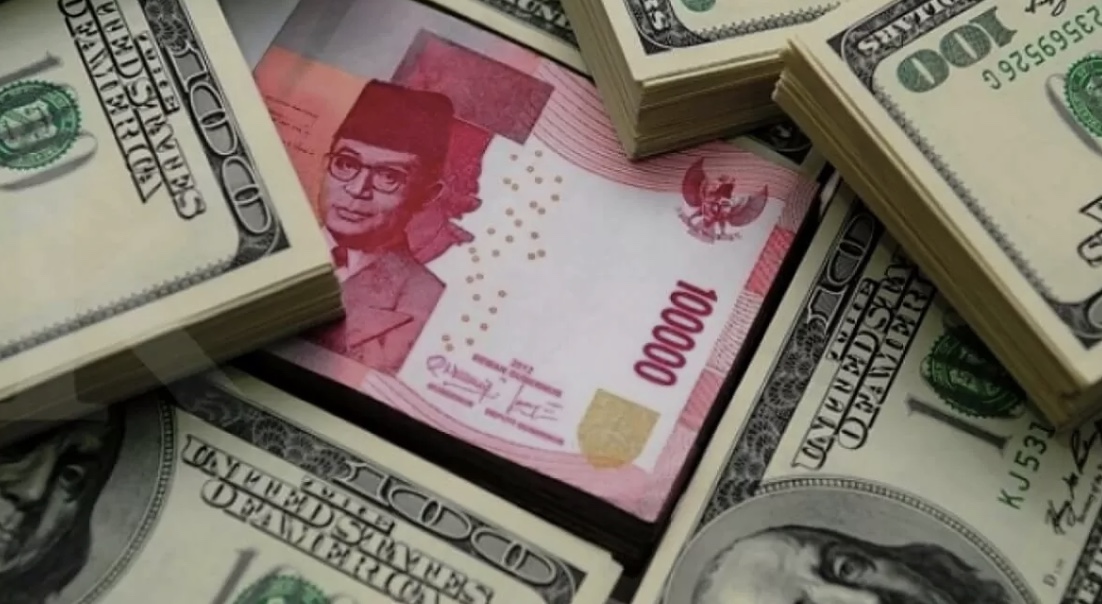
Indonesia’s rupiah opened weaker on Tuesday (20 January 2026), hovering just below the psychological threshold of 17,000 per US dollar, reflecting continued pressure from global uncertainty and cautious investor sentiment. In early trading, the currency slipped to around 16,986 per dollar—equivalent to roughly USD 0.000059—extending losses from the previous session.
Currency analyst Lukman Leong from Doo Financial Futures noted that the rupiah still has room to recover, supported by renewed pressure on the US dollar following sell-offs in US government bonds. He explained that softer demand for US Treasuries has reduced the dollar’s appeal, creating space for emerging market currencies to stabilize. However, Lukman cautioned that any rebound may remain limited as investors remain on hold ahead of Bank Indonesia’s upcoming policy meeting. He projected the rupiah would trade within a tight range close to the 16,900–17,000 level per dollar.
The currency’s weakness reflects a broader risk-off mood across global markets, where investors are balancing geopolitical tensions and shifting expectations around US monetary policy.
Fundamentals, Capital Inflows, and the Path to Recovery
Indonesia’s Finance Minister Purbaya Yudhi Sadewa struck an optimistic tone, stressing that exchange rate movements ultimately reflect economic fundamentals. He pointed to the domestic equity market as a key signal of confidence, highlighting that Indonesia’s benchmark stock index recently climbed to a record high above 9,130 points.
“And if you look at the stock index, it has reached an all-time high. When the index rises to that level, there must be foreign capital flowing in. It’s impossible for domestic funds alone to push it that far, so it’s only a matter of time before the rupiah strengthens as dollar supply increases,” Purbaya said, as quoted by Antara.
He also dismissed speculation that the rupiah’s weakness was linked to concerns over central bank independence following reports of a senior government official being considered for a Bank Indonesia role. Purbaya said such fears were unfounded and emphasized that monetary policy credibility remains intact.
Market analysts, however, note that external pressures remain significant. Currency observer Ibrahim Assuaibi said the rupiah has been weighed down by a combination of fiscal concerns and global risk factors. Indonesia’s 2025 budget deficit, estimated at nearly 3 percent of GDP, has added to investor caution, while escalating geopolitical tensions have boosted demand for the US dollar as a safe-haven asset.
Trade policy uncertainty—particularly renewed tariff threats involving the US and Europe—has further strengthened the dollar, putting additional strain on emerging market currencies. Analysts also highlighted lingering doubts over whether the US Federal Reserve will deliver multiple interest-rate cuts this year, a factor that continues to support the greenback.
Despite these challenges, expectations of steady foreign inflows, resilient domestic demand, and continued policy coordination between the government and central bank underpin optimism that the rupiah can regain strength. For now, markets appear to be waiting for clearer signals—both at home and abroad—before making their next decisive move.
Source: Antara, InfoBankNews, Kumparan
Special Photo Credit: Antara
