
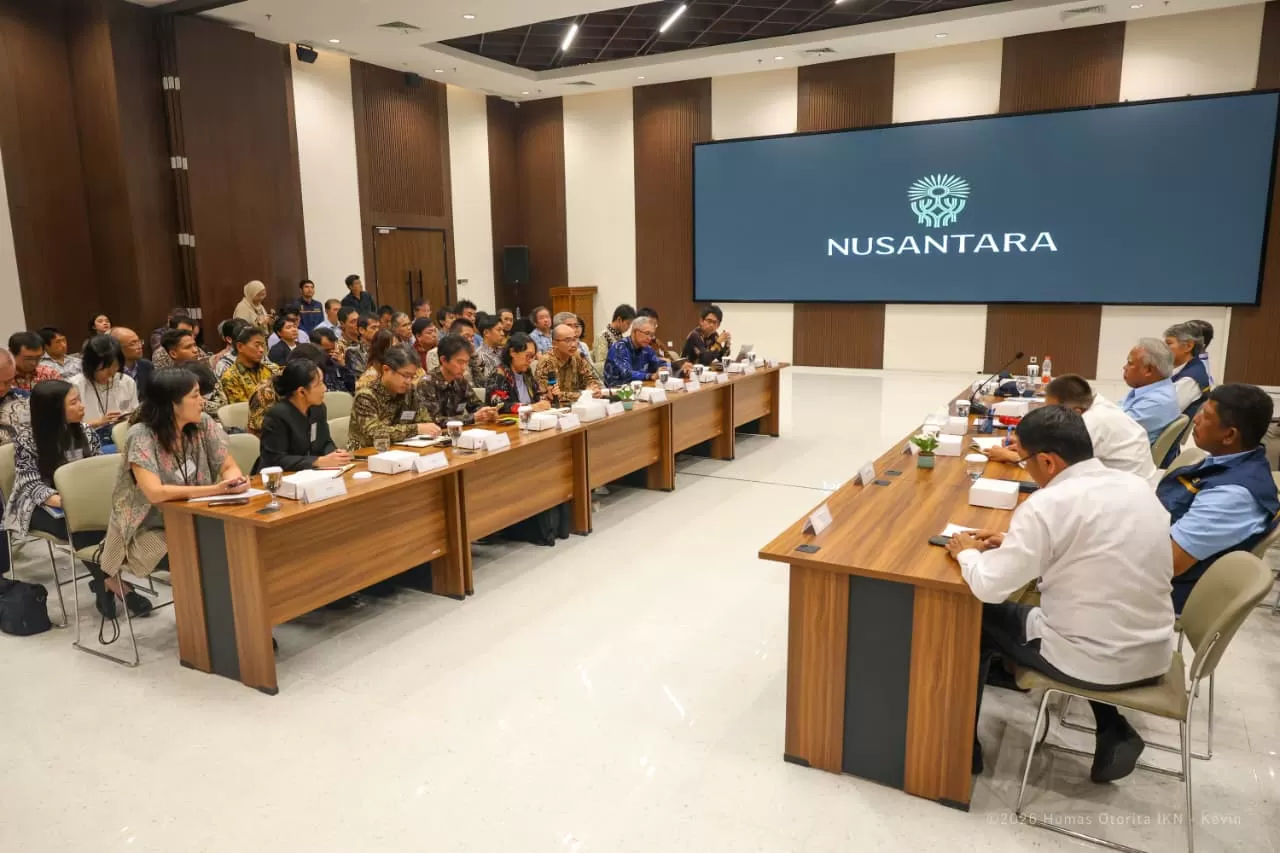
Japan has delivered one of the clearest signals yet of its growing interest in Indonesia’s new capital, Nusantara (IKN), with 34 Japanese companies exploring investment opportunities in the ambitious megaproject in East Kalimantan.
The visit, organized by the Japan External Trade Organization (JETRO), brought a 60-member delegation to the Core Government Center (KIPP) area of IKN on Thursday (January 29, 2026). The group represented a broad cross-section of Japan’s economic strength, including banking, machinery, electricity, construction materials, food, and services.
For Indonesia, which is accelerating efforts to attract foreign direct investment (FDI) into IKN, the scale and composition of the delegation marked more than a ceremonial diplomatic gesture. It signaled concrete business interest from one of Indonesia’s longest-standing strategic partners.
Before formal discussions began, the Japanese delegation was taken on a field visit to key infrastructure sites to assess the city’s readiness firsthand. The tour covered several strategic facilities that reflect the foundation of a functioning capital city.
They inspected the State Civil Servant (ASN) apartment towers, the Integrated Waste Management Facility (TPST), the Sepaku Semoi Dam—critical for long-term water security—and the VVIP Airport, which will serve as a gateway for global connectivity.
By showcasing tangible progress on housing, sanitation, water resilience, and transport infrastructure, the Nusantara Capital Authority (OIKN) aimed to assure potential investors that development is moving beyond planning documents and into physical realization.
Head of the OIKN, Basuki Hadimuljono, welcomed the visit and expressed optimism that it would translate into concrete investment commitments.
“I hope that this visit will leave an investment footprint for the future development of IKN. This is truly extraordinary, with 60 people present, including business players,” Basuki said, as quoted by Kompas.
His remarks underscore the government’s expectation that serious investor engagement will follow site inspections and dialogue sessions.
JETRO Jakarta President Director Shinji Hurai also expressed appreciation for the open engagement facilitated by the OIKN. Although this marked his first visit to IKN, Hurai emphasized the importance of direct dialogue to understand on-the-ground dynamics.
“I thank the Nusantara Authority for supporting the organization of this meeting. If the Head of the Authority asks who came here for the first time, this is my first visit to IKN,” Hurai said.
From an urban development perspective, Japan’s potential involvement carries strategic weight. Japanese firms are widely recognized for their expertise in smart city technology, advanced infrastructure systems, and stringent environmental standards—key pillars of IKN’s vision as a sustainable, future-ready capital.
Equally significant is the presence of Japanese banking institutions within the delegation. Their participation suggests that long-term financing structures and risk assessments are already under consideration, a crucial element for large-scale infrastructure and real estate development.
As Indonesia positions IKN as a new economic hub, strong interest from Japan could serve as a catalyst for other developed economies to secure early entry into the project. For foreign investors watching Indonesia’s capital relocation unfold, the message is increasingly clear: IKN is moving from vision to viable investment destination.
Source: Kompas
Special Photo Credit: OIKN/KP
