
Indonesia’s plantation exports are set to accelerate in early 2026 after delivering robust growth throughout 2025. Key commodities — palm oil, coffee, cocoa, coconut, rubber, and tea — have strengthened Indonesia’s position as a major global supplier of agricultural products.
Palm Oil Leads Export Performance
Palm oil remains the backbone of the sector. From January to December 2025, exports of palm oil and its derivatives reached US$24.42 billion, up 21.83 percent from 2024. Growth was supported by a 9 percent rise in export volumes, relatively high global prices, and sustained demand from major markets such as China, India, and other Asian countries.
Crude palm oil (CPO) shipments surged toward the end of 2025 as global vegetable oil prices strengthened — a trend that continues into early 2026. Palm oil remains the largest foreign exchange contributor within Indonesia’s plantation industry, particularly as more downstream products gain market share.
Coffee Rebounds with Higher Value
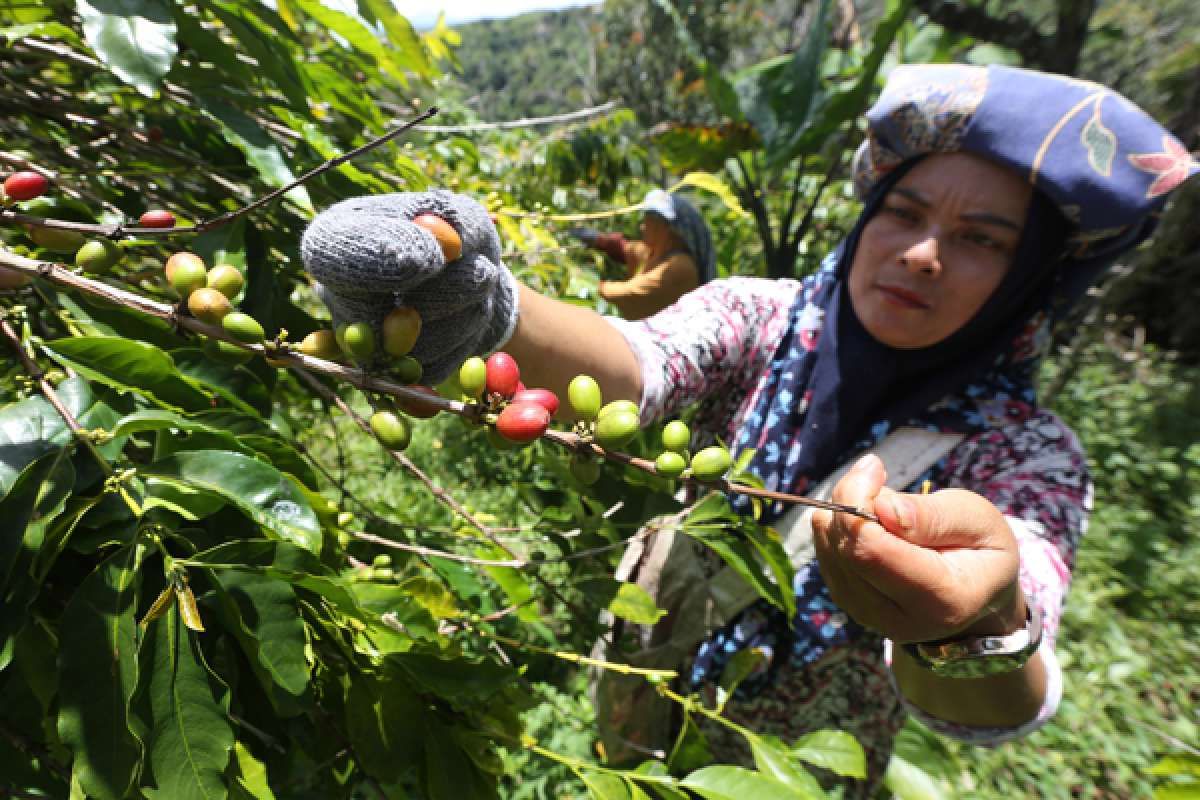
Indonesia’s coffee exports staged a strong recovery after a weak 2023. In 2024, exports reached 316,700 tons valued at US$1.64 billion, the highest level in five years, with the United States and Europe as main destinations.
Momentum continued in 2025, driven by improved harvests and elevated global coffee prices. Growth has increasingly come from specialty segments. Premium Arabica from Gayo, Toraja, and Kintamani commands higher prices in global markets. As the world’s fourth-largest coffee producer, Indonesia enters 2026 with positive prospects.
Cocoa and Coconut Post Sharp Gains
Cocoa emerged as one of 2025’s strongest performers, fueled by downstream processing that shifted exports from raw beans to higher-value products like cocoa butter and cocoa powder. Between January and September 2025, cocoa and processed exports reached US$2.8 billion, nearly 70 percent higher than the same period a year earlier.
Global chocolate demand in Europe, Australia, and Asia has aligned with Indonesia’s expanding processing capacity, strengthening its foothold in premium segments.
Coconut exports also jumped significantly. From January to October 2025, exports reached approximately US$2.48 billion, up 58 percent year-on-year. China absorbed more than 17 percent of total export value, while Malaysia, Singapore, the Netherlands, and Thailand also posted strong demand. Whole coconut exports alone surged 122 percent annually. Further expansion into the Middle East, South Asia, and Africa could support growth in 2026.
Ongoing Challenges
Rubber exports remained stable but faced pressure from lower global prices and climate-related supply constraints, although automotive demand provided support. Tea continues to face structural decline due to shrinking plantation areas and output.
Exporters must also navigate tighter non-tariff regulations, including the European Union’s Deforestation-free Regulation (EUDR), which requires traceability and proof of deforestation-free production for palm oil, cocoa, coffee, and rubber. Sanitary standards, pesticide residue limits, and sustainability certifications are increasingly decisive.
Climate change, logistics costs, and infrastructure gaps remain key risks. However, with strong 2025 performance as a foundation, Indonesia’s plantation exports are positioned for continued expansion in 2026 — provided productivity, downstream development, and sustainability compliance remain priorities.
Source: Antara, Pantau
Special Photo Credit: ANTARA FOTO/Irwansyah Putra/wsj
