
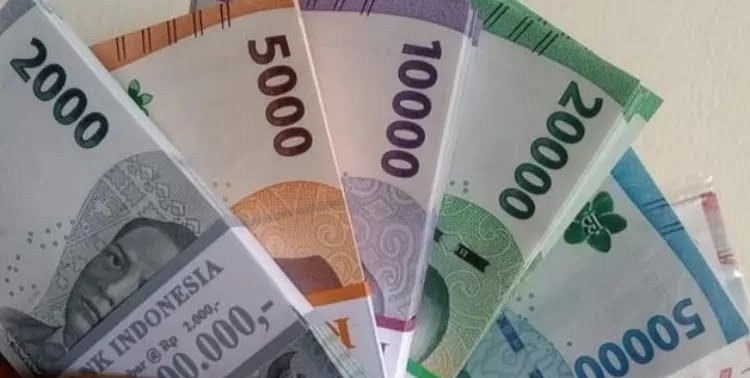
As Ramadan approaches, demand for freshly issued rupiah banknotes surges across Indonesia, driven by the tradition of distributing THR (Tunjangan Hari Raya) and cash-filled envelopes during Idul Fitri. To manage the seasonal spike and prevent overcrowding, Bank Indonesia (BI) has reactivated its regulated exchange system for Eid 2026.
The central bank has prepared approximately USD 11.8 billion in cash to maintain liquidity during Ramadan and Idul Fitri. Around USD 11.3 billion will circulate through regular banking channels such as ATMs and commercial bank branches, while USD 546 million is allocated specifically for public exchange services under BI’s annual SERAMBI (Semarak Rupiah Ramadan dan Berkah Idulfitri) program.
The public exchange period runs from February 28 to March 15, 2026, supported by 2,883 service points nationwide, including mobile cash units and designated bank branches to ensure broader access during peak demand.
Booking Schedule and Exchange Limits
To ensure fair access, BI has capped the exchange amount at Rp5.3 million per person (around USD 337) for each reservation. This limit is designed to distribute smaller denominations evenly among households preparing for Eid celebrations and to prevent bulk exchanges by a small number of individuals.
Walk-in exchanges are not permitted. All participants must secure a booking in advance through BI’s official online platform at pintar.bi.go.id.
Due to high traffic, users may experience a virtual waiting room before accessing available quotas. Booking schedules are divided by region:
- Java: February 24, 2026 at 08:00 WIB
- Outside Java: February 27, 2026 at 08:00 WIB
Quotas are limited and typically fill quickly, particularly in densely populated provinces and urban centers. Applicants must select their province, choose a preferred exchange location and date, input identification details, and download a booking confirmation. This confirmation must be presented on the selected exchange day.
Key Requirements and Access for Foreign Residents
The PINTAR system requires users to enter a valid Indonesian National Identification Number (NIK), verified against a KTP (Indonesian ID card). As a result, the public mobile exchange service is primarily accessible to Indonesian citizens and permanent residents holding a KTP.
Foreign residents without a KTP cannot register directly through the BI system. However, they may still obtain smaller denomination banknotes through alternative channels. Many expatriates rely on their local commercial bank branches, subject to availability and internal policies. Others coordinate with Indonesian spouses, family members, or staff who are eligible to book a slot through the official platform.
On the day of exchange, participants must bring their original KTP, booking confirmation (either printed or digital), and the exact amount of cash stated in their reservation. Bookings are strictly non-transferable, and missed appointments automatically expire. A new reservation can only be made if remaining quota is available.
With Eid demand expected to intensify closer to Idul Fitri, early booking is strongly advised. Planning ahead ensures smoother access to crisp rupiah banknotes, allowing families to uphold cherished holiday traditions without last-minute stress.
Source: CNN Indonesia, Liputan6
Special Photo Credit: Net
